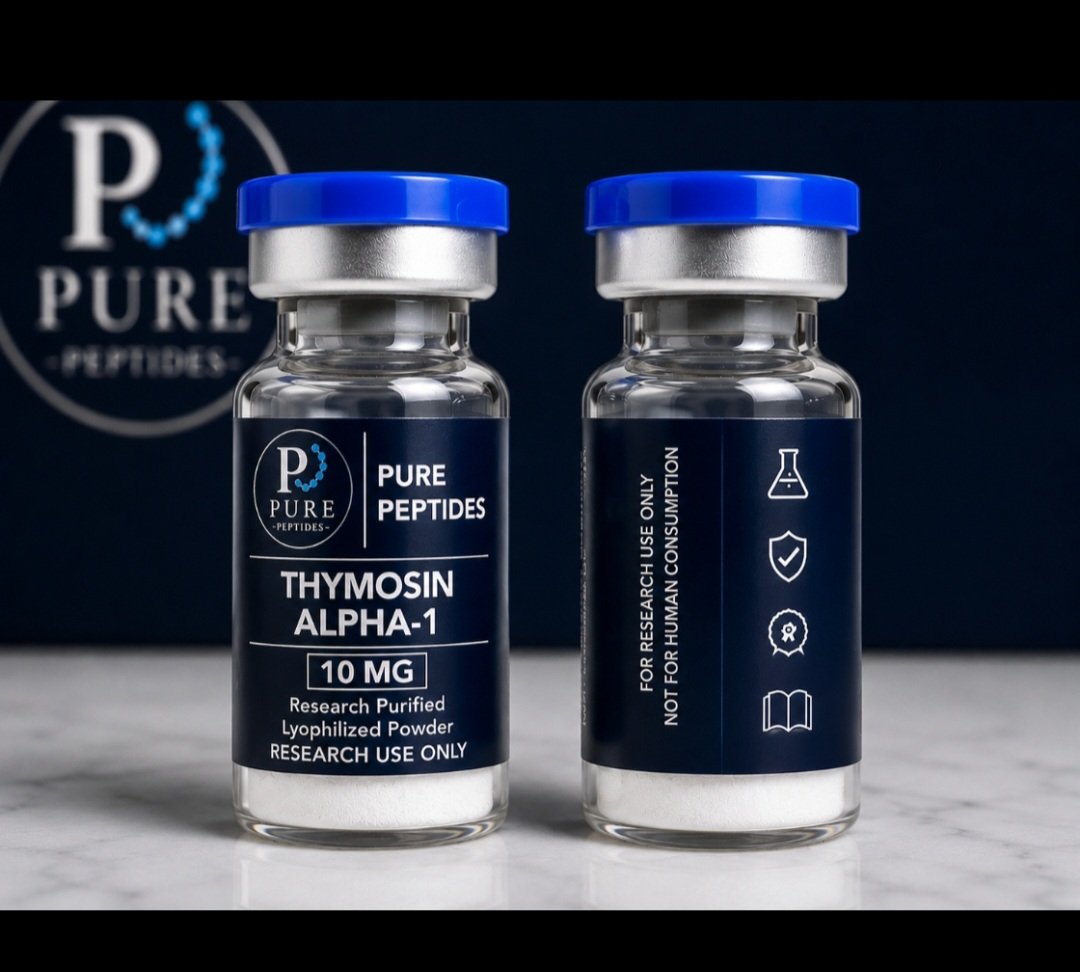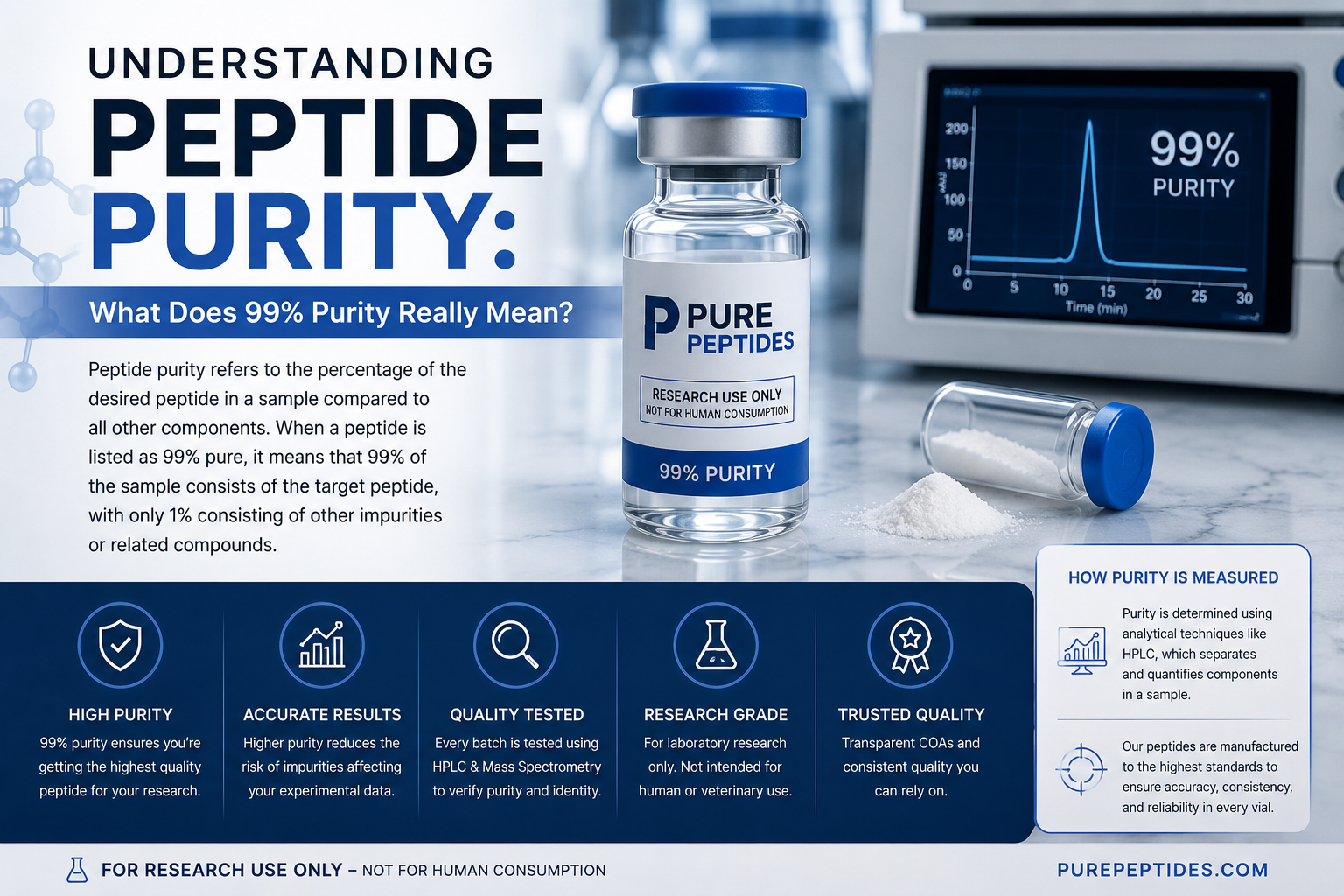

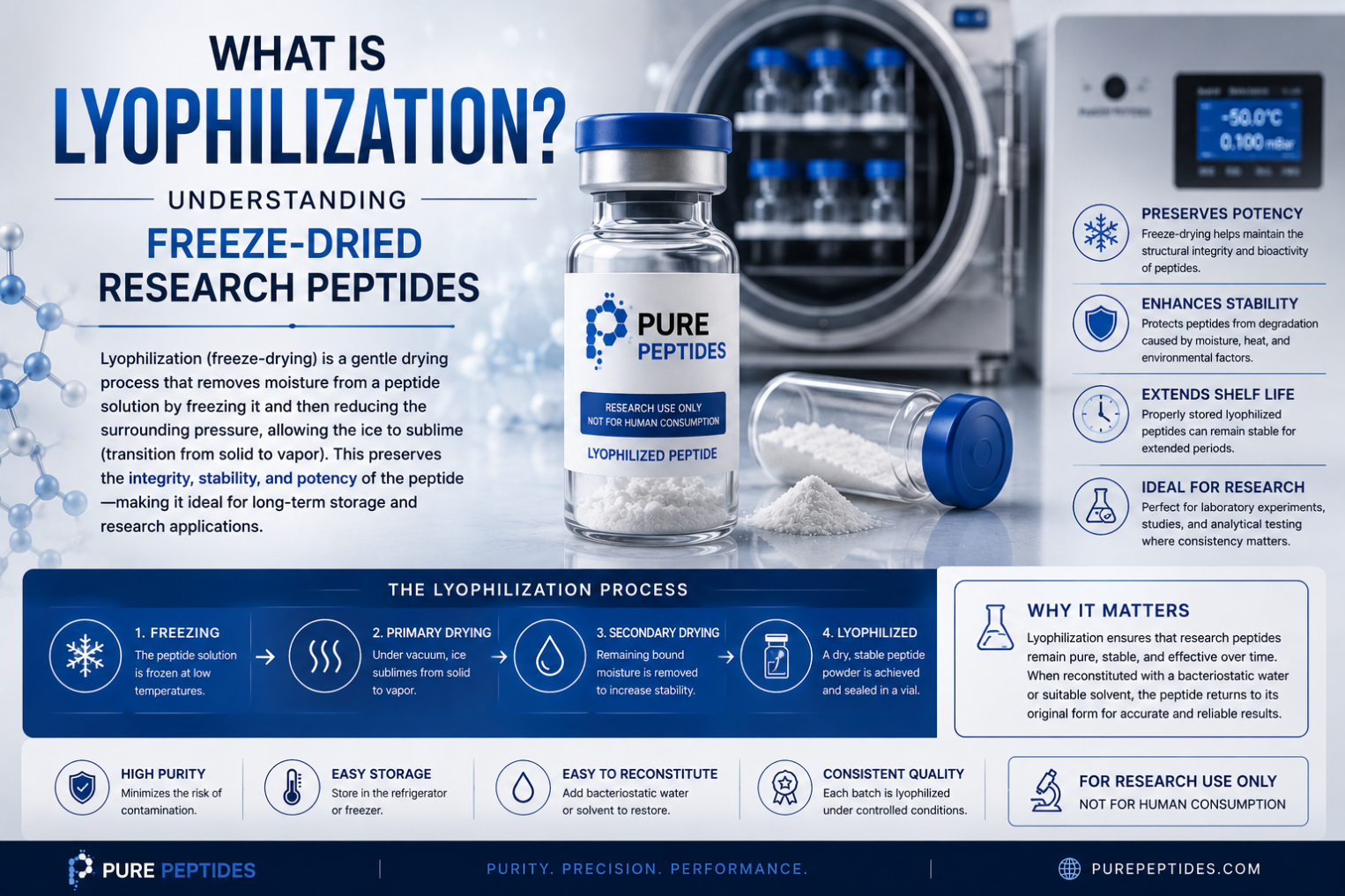
Many research peptides are supplied as a lyophilized powder rather than a liquid solution. Lyophilization, commonly known as freeze-drying, is a process used to improve stability and extend storage life.
What Is Lyophilization?
Lyophilization removes water from a material through a controlled freezing and vacuum process. By removing moisture, researchers can store materials more efficiently while helping preserve their integrity during shipping and storage.The result is the white powder commonly found in peptide research vials.
Why Are Peptides Lyophilized?
Researchers often prefer lyophilized products because they may offer:- Improved stability- Longer shelf life- Easier storage- Reduced degradation during transport- Consistent handling in laboratory settings
What Does a Lyophilized Peptide Look Like?
Depending on the product and manufacturing process, a lyophilized peptide may appear as:
– A compact white cake
– A fluffy powder
-A thin layer adhered to the vial
Minor variations in appearance can occur between batches.
Storage Considerations
Researchers should always follow supplier recommendations regarding storage and handling. Factors that may affect stability include:
– Temperature
– Light exposure
– Moisture
Storage duration
Proper storage practices help maintain product quality and consistency.
Transparency Matters
Understanding how research products are manufactured and prepared can help researchers make informed purchasing decisions. Lyophilization remains one of the most widely used methods for preparing peptides intended for laboratory and research applications.
For Research Use Only. Not for Human Consumption.