
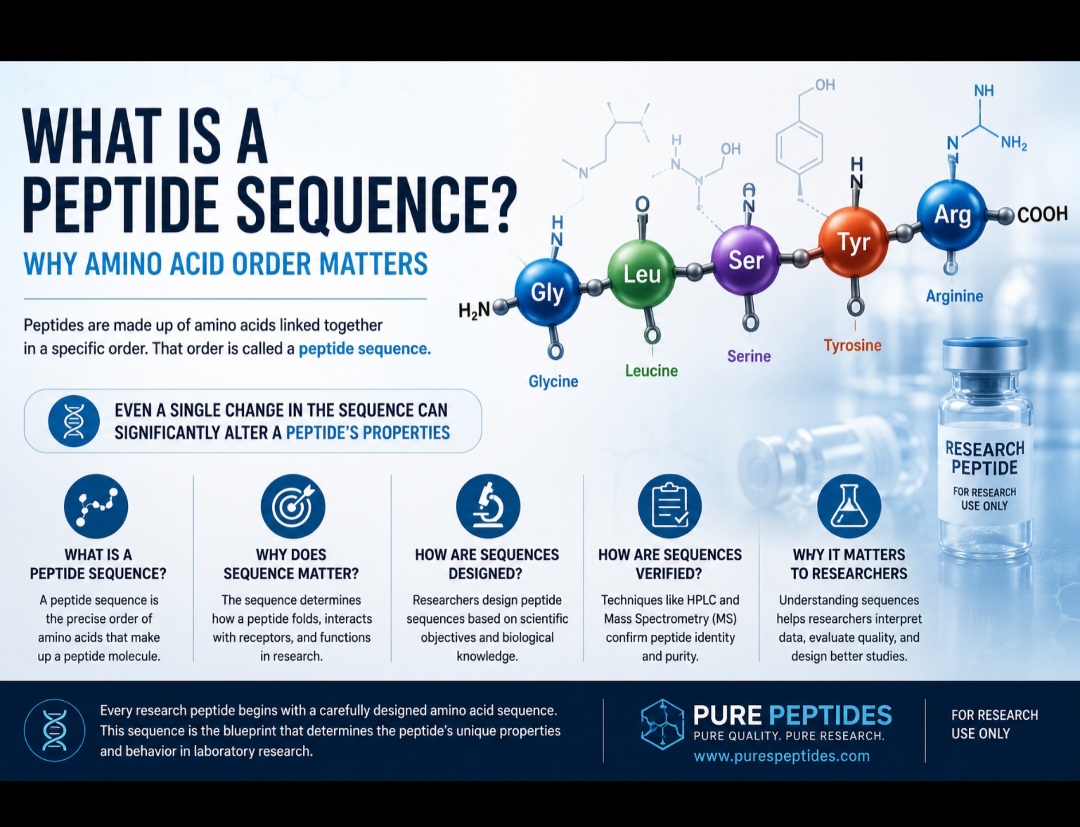

Peptides are made up of amino acids linked together in a specific order known as a peptide sequence. While peptides may appear similar, even a single change in their amino acid sequence can significantly alter their biological properties and research applications.
Understanding peptide sequences is fundamental to peptide science and helps explain why different compounds behave differently in laboratory settings.
What Is a Peptide Sequence?
A peptide sequence refers to the precise order of amino acids that make up a peptide molecule.
Scientists use standardized abbreviations to describe amino acid sequences. The arrangement of these amino acids determines the peptide’s structure, stability, and interactions during research.
Just as changing one letter can alter the meaning of a word, changing one amino acid can completely change the characteristics of a peptide.
Why Does Sequence Matter?
The sequence determines how a peptide folds, interacts with receptors, and functions within experimental models.
Different sequences can influence:
- Molecular stability
- Binding characteristics
- Solubility
- Biological activity
- Research applications
Because of this, precision during peptide synthesis is essential.
How Are Peptide Sequences Designed?
Researchers design peptide sequences based on scientific objectives and existing biological knowledge.
Many peptides are inspired by naturally occurring hormones, proteins, or signaling molecules found within the body, while others are modified to improve stability or investigate specific biological pathways.
How Are Sequences Verified?
After manufacturing, peptide identity is commonly confirmed using analytical techniques such as:
- High-Performance Liquid Chromatography (HPLC)
- Mass Spectrometry (MS)
These methods help verify that the synthesized peptide matches its intended sequence and meets established quality standards.
Why Researchers Should Understand Peptide Sequences?
Even if researchers never manufacture peptides themselves, understanding peptide sequences provides valuable insight into:
- Scientific publications
- Certificates of analysis (COA)
- Quality control documentation
- Peptide nomenclature
- Experimental design
A basic understanding of amino acid sequences helps researchers better interpret laboratory data and evaluate research materials.
Final Thoughts?
Every research peptide begins with a carefully designed amino acid sequence. This sequence serves as the blueprint that determines the peptide’s unique properties and behavior in laboratory research. Understanding peptide sequences is an important step toward building a strong foundation in peptide science.
Disclaimer: Products offered by Pure Peptides are intended strictly for laboratory research purposes only. They are not intended for human or veterinary use, diagnosis, treatment, or consumption.