

Peptide research continues to evolve as scientists explore new methods to improve stability, circulation time, and experimental consistency. One approach that has received significant attention in laboratory settings is PEGylation, a process that involves attaching polyethylene glycol (PEG) molecules to peptide compounds.
What Is PEGylation?
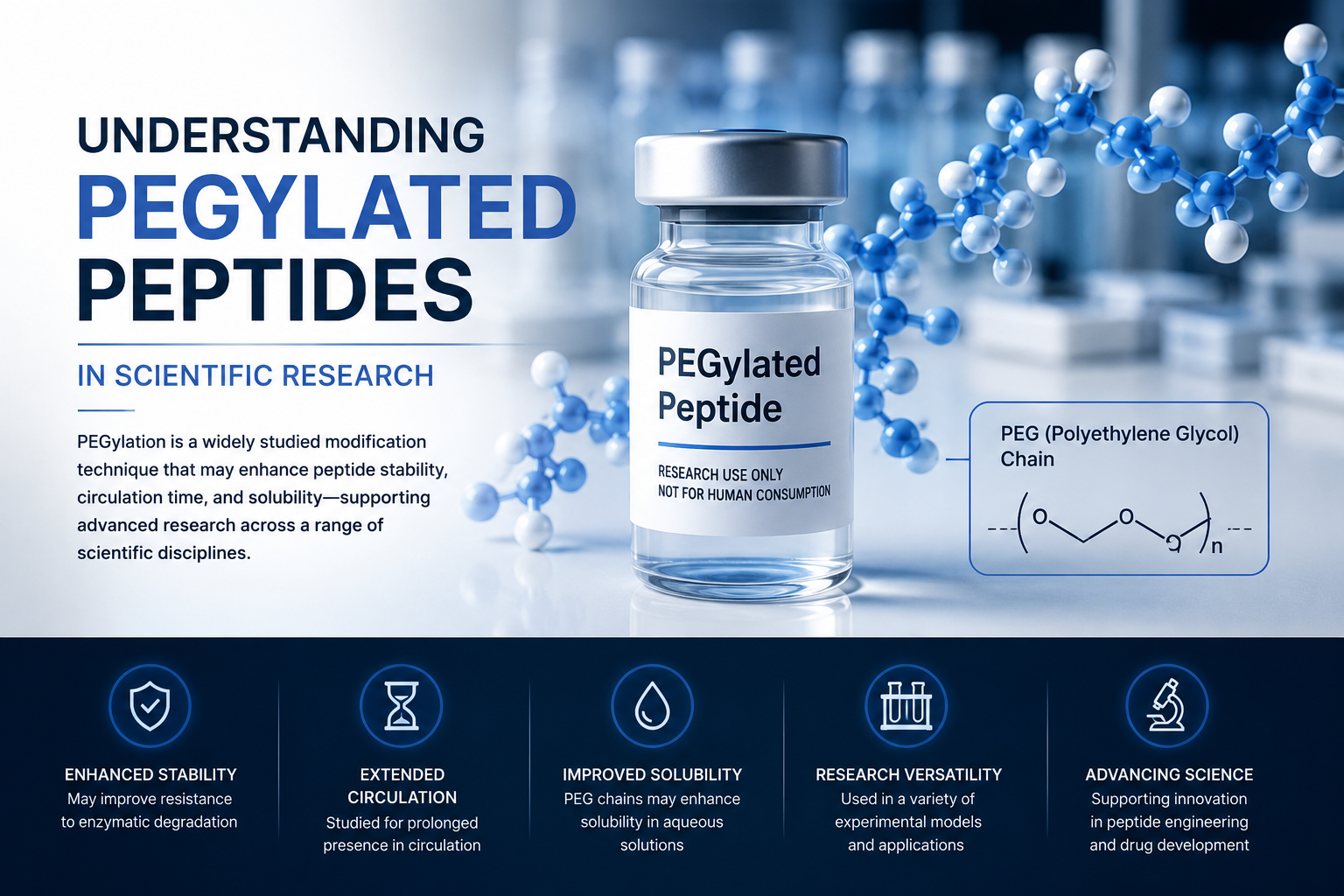
PEGylation is a chemical modification technique used in research and pharmaceutical development to alter the physical properties of peptides and proteins. By attaching PEG chains to a molecule, researchers can investigate changes in solubility, stability, and interactions within experimental systems. The size and structure of the attached PEG molecule may influence how a compound behaves under specific laboratory conditions, making PEGylation an important area of ongoing scientific study.
Potential Research Applications
In scientific literature, PEGylated compounds have been examined for several experimental purposes, including:Improving molecular stability during storage and handling.
Extending circulation time in preclinical models
Reducing degradation by certain enzymesEnhancing solubility in aqueous environmentsInvestigating controlled delivery mechanisms
Researchers continue to explore how these modifications affect peptide performance across various fields of study.
Examples of PEGylated Research Compounds
Several well-known research compounds utilize PEG technology or related modifications as part of their design. These advancements help scientists better understand molecular interactions and optimize experimental protocols. The development of modified peptides remains an active area of investigation in biotechnology, pharmaceutical sciences, and academic research laboratories.
Proper Storage Considerations
Like many research materials, PEGylated peptides should be handled according to manufacturer recommendations and established laboratory procedures. Factors such as temperature, moisture exposure, and repeated freeze-thaw cycles may influence experimental integrity and long-term stability. Maintaining appropriate documentation, storage conditions, and handling protocols helps ensure consistent and reliable research outcomes.
The Future of Peptide Engineering
As peptide science advances, researchers continue to investigate innovative methods for improving molecular performance and expanding potential applications. PEGylation represents one of many approaches being studied to better understand how structural modifications influence biological and chemical properties.
Continued research in this field may contribute to new discoveries in drug development, biotechnology, and fundamental molecular science.
Disclaimer: All products and information provided by Pure Peptides are intended strictly for educational, scientific, and laboratory research purposes only. Products are not intended for human consumption, medical use, or veterinary applications.Your Attractive Heading