
How Are Research Peptides Manufactured?
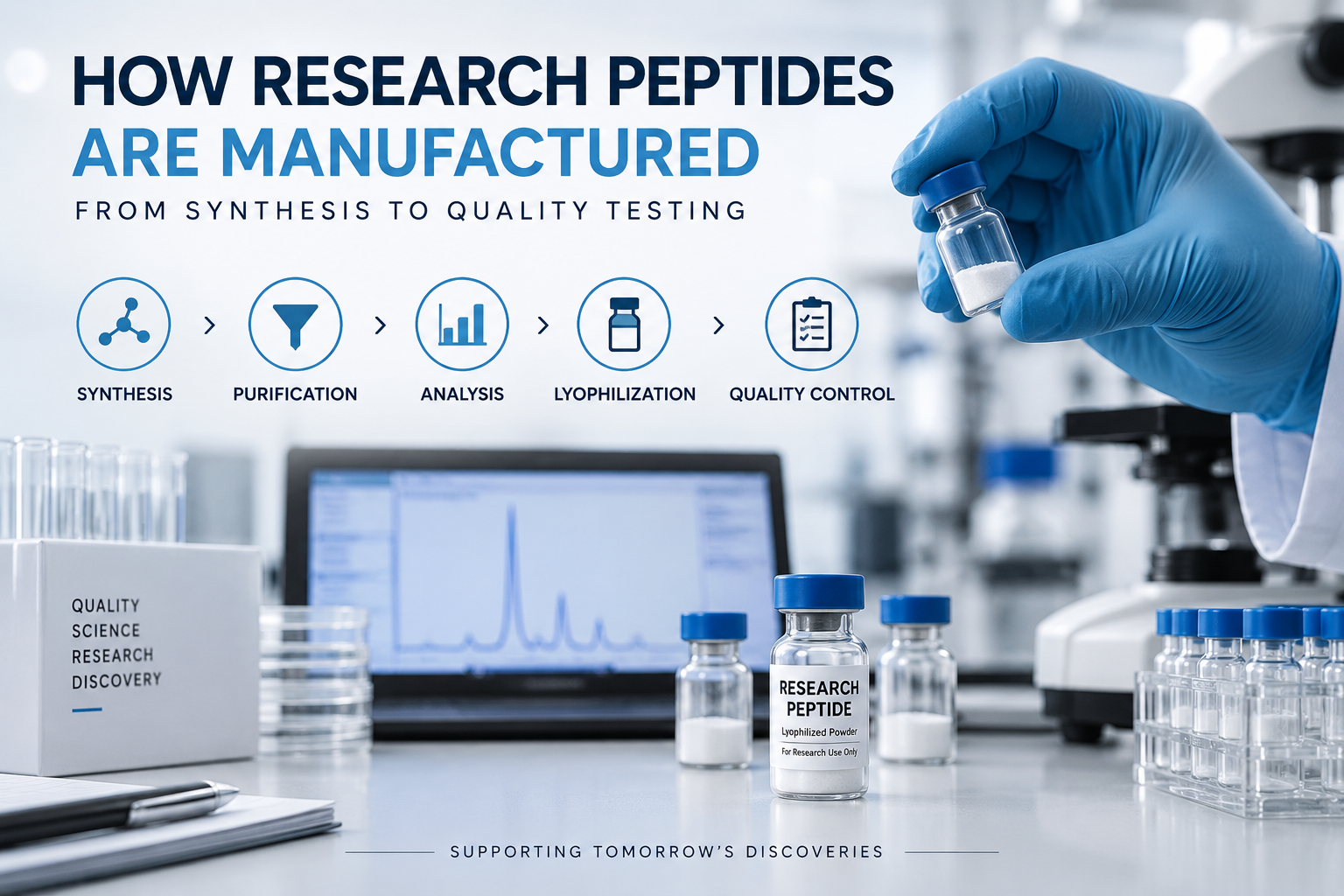
Research peptides undergo a carefully controlled manufacturing process before they reach laboratories. From synthesis and purification to analytical testing and quality control, each step is designed to help ensure the final material meets established specifications.
Understanding this process can help researchers better interpret product documentation and Certificates of Analysis (COAs).
Step 1: Peptide Synthesis
Most research peptides are produced using Solid-Phase Peptide Synthesis (SPPS).
During this process, amino acids are added one at a time in a specific sequence until the desired peptide chain is complete. This method allows manufacturers to produce highly specific peptide sequences with excellent consistency.
Step 2: Cleavage & Collection
After the peptide chain has been assembled, it is separated from the solid support material and collected.
At this stage, the material contains the intended peptide along with small amounts of synthesis byproducts that will be removed during purification.
Step 3: Purification
Purification is one of the most important stages of manufacturing.
Techniques such as High-Performance Liquid Chromatography (HPLC) are commonly used to separate the desired peptide from impurities. The goal is to produce material that meets the intended purity specifications for laboratory research.
Step 4: Identity Testing
Once purified, manufacturers verify the molecular identity of the peptide.
Mass Spectrometry (MS) is commonly used to confirm that the peptide’s molecular weight matches the expected compound.
This helps ensure researchers receive the correct material.
Step 5: Quality Control
Before distribution, batches commonly undergo quality testing that may include:
- Purity analysis
- Identity confirmation
- Appearance inspection
- Moisture evaluation
- Batch documentation
Results are often summarized in a Certificate of Analysis (COA).
Step 6: Lyophilization
Many research peptides are then lyophilized (freeze-dried) to improve stability during storage and shipping.
Lyophilization removes water while helping preserve the peptide until it is prepared for laboratory research.
Why This Process Matters
Every stage of manufacturing contributes to producing research materials with documented quality characteristics.
Reviewing manufacturing documentation, batch numbers, and Certificates of Analysis can provide additional transparency regarding a research product.
Final Thoughts
The manufacturing of research peptides involves multiple carefully controlled steps, from peptide synthesis to purification and analytical testing.
Understanding these processes helps researchers better appreciate the quality control measures that support laboratory research materials.
Frequently Asked Questions
What is Solid-Phase Peptide Synthesis (SPPS)?
SPPS is a commonly used manufacturing method in which amino acids are added one by one to create a specific peptide sequence.
Why are research peptides purified?
Purification helps remove unwanted byproducts from the manufacturing process and supports the desired purity level.
Why are many peptides freeze-dried?
Lyophilization helps improve stability during storage and transportation before laboratory preparation.