
Peptide stability plays an important role in laboratory research. Whether a peptide is being transported, stored, or prepared for research, maintaining its integrity helps ensure consistent and reliable experimental results.
Several environmental factors can influence peptide stability over time, making proper storage and handling an important part of any research workflow.
What Is Peptide Stability?
Peptide stability refers to a peptide’s ability to maintain its chemical structure and integrity over time.
Researchers strive to minimize degradation so that the material being studied remains as close as possible to its intended composition.
The stability of a peptide can vary depending on:
- Amino acid sequence
- Molecular structure
- Manufacturing process
- Storage conditions
- Moisture exposure
- Temperature
- Light exposure
Factors That Can Affect Stability
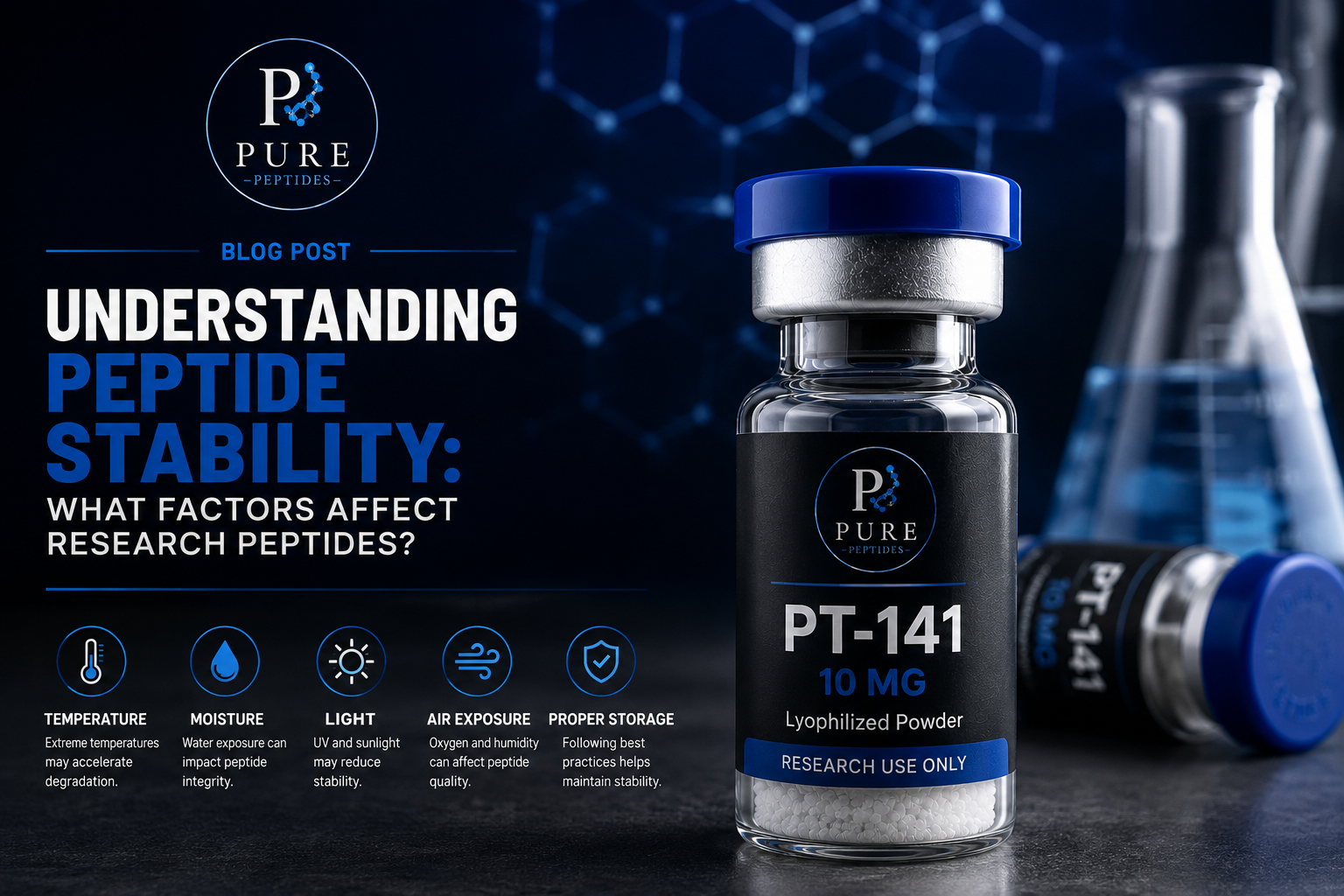
Temperature
Extreme temperatures may accelerate degradation for some compounds. Researchers typically store peptides according to manufacturer recommendations and avoid unnecessary temperature fluctuations.
Moisture
Water is one of the primary factors that can affect peptide stability. Lyophilized (freeze-dried) peptides are produced to minimize moisture exposure prior to laboratory preparation.
Light
Some peptides may be sensitive to prolonged exposure to direct sunlight or ultraviolet (UV) light. Opaque packaging or dark storage conditions can help reduce unnecessary exposure.
Air Exposure
Repeated opening of containers may expose materials to humidity and oxygen. Researchers often minimize unnecessary handling and keep containers properly sealed.
Why Lyophilization Matters
Many research peptides are supplied in a lyophilized (freeze-dried) form because removing water can improve stability during storage and shipping.
Once prepared for laboratory use, researchers generally follow storage recommendations appropriate for the specific compound being studied.
Quality Control and Stability
Manufacturers commonly evaluate peptide quality using analytical techniques such as:
- High-Performance Liquid Chromatography (HPLC)
- Mass Spectrometry (MS)
- Identity verification
- Purity analysis
These methods help verify that the material meets the intended specifications before distribution for research purposes.
Best Practices
Researchers commonly aim to:
- Store peptides according to manufacturer guidance.
- Protect materials from excessive heat and moisture.
- Limit unnecessary exposure to light.
- Keep containers tightly sealed when not in use.
- Handle materials using appropriate laboratory procedures.
Frequently Asked Questions
What is peptide stability?
Peptide stability refers to how well a peptide maintains its structure and integrity over time under specific storage and handling conditions.
Does temperature affect peptides?
Temperature can influence the stability of many peptides, which is why following manufacturer storage recommendations is important.
Why are many peptides freeze-dried?
Lyophilization removes water, helping improve stability during storage and transportation before laboratory preparation.