
Research peptides play an important role in modern scientific studies, but many people are unfamiliar with how these complex molecules are produced. Understanding the manufacturing process helps researchers better appreciate the quality standards and testing that go into peptide production.
What are peptides?
Peptides are short chains of amino acids linked together in a specific sequence. The order of these amino acids determines how the peptide behaves during scientific research and laboratory studies.
Because even a small change in sequence can alter a peptide’s properties, precision during manufacturing is essential.
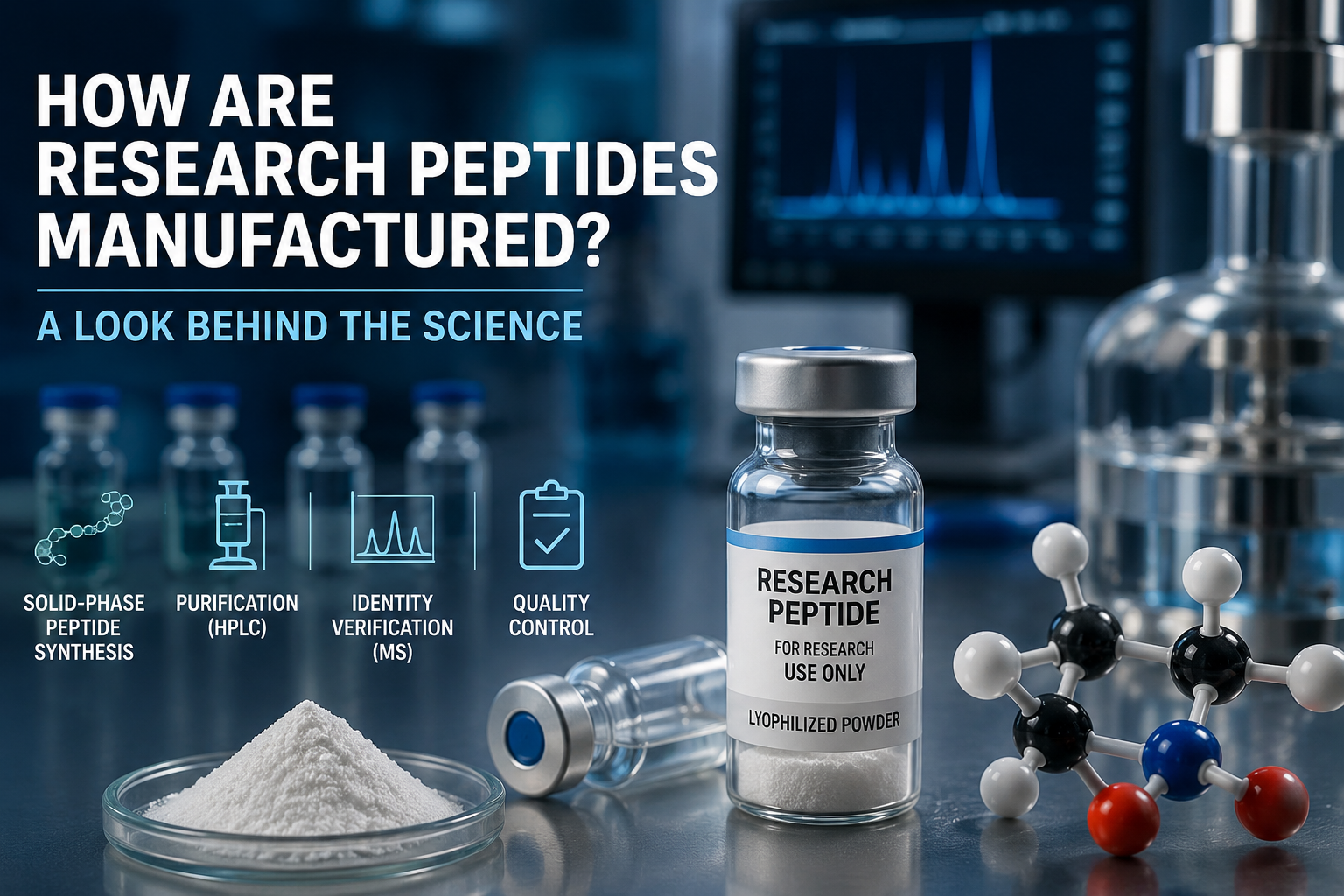
Solid-Phase Peptide Synthesis (SPPS)
Most modern research peptides are produced using a technique known as Solid-Phase Peptide Synthesis (SPPS).
During this process:
-Amino acids are added one at a time in a precise sequence.
-Chemical reactions bond each amino acid together.
-Protective groups are removed after each step
This method allows scientists to manufacture highly specific peptide sequences with excellent consistency.
Purification
After synthesis, peptides undergo purification to remove unwanted byproducts and incomplete peptide chains.
One of the most common purification methods is High-Performance Liquid Chromatography (HPLC), which separates compounds based on their chemical properties.
Purification helps ensure researchers receive materials with high levels of purity suitable for laboratory use.
Identity Verification
Once purified, manufacturers often verify peptide identity using analytical techniques such as Mass Spectrometry (MS).
Mass spectrometry helps confirm that the finished peptide has the expected molecular weight and composition before release for research.
Quality Control
Before distribution, research peptides commonly undergo additional quality assessments that may include:
-Purity Analysis
-Identity Confirmation
-Appearance Inspection
-Batch Documentation
-Certificate of Analysis (COA)
These quality control measures help support consistency between production batches.
Why manufacturing matters?
High-quality manufacturing practices contribute to:
-Greater batch-to-batch consistency
-Reliable experimental material
-Improved documentation
-Better confidence in research results
Understanding how research peptides are manufactured helps researchers evaluate product quality beyond simply reading the label.
Final thoughts
Modern peptide manufacturing combines advanced chemistry, precision synthesis, purification, and analytical testing to produce research materials used in laboratories worldwide.
While manufacturing methods continue to evolve, quality control remains an essential part of producing consistent research-grade peptides.
Disclaimer: Pure Peptides supplies products strictly for laboratory research purposes only. Products are not intended for human or veterinary use, diagnosis, treatment, or consumption.