Why Do Research Peptides Have Batch Numbers?
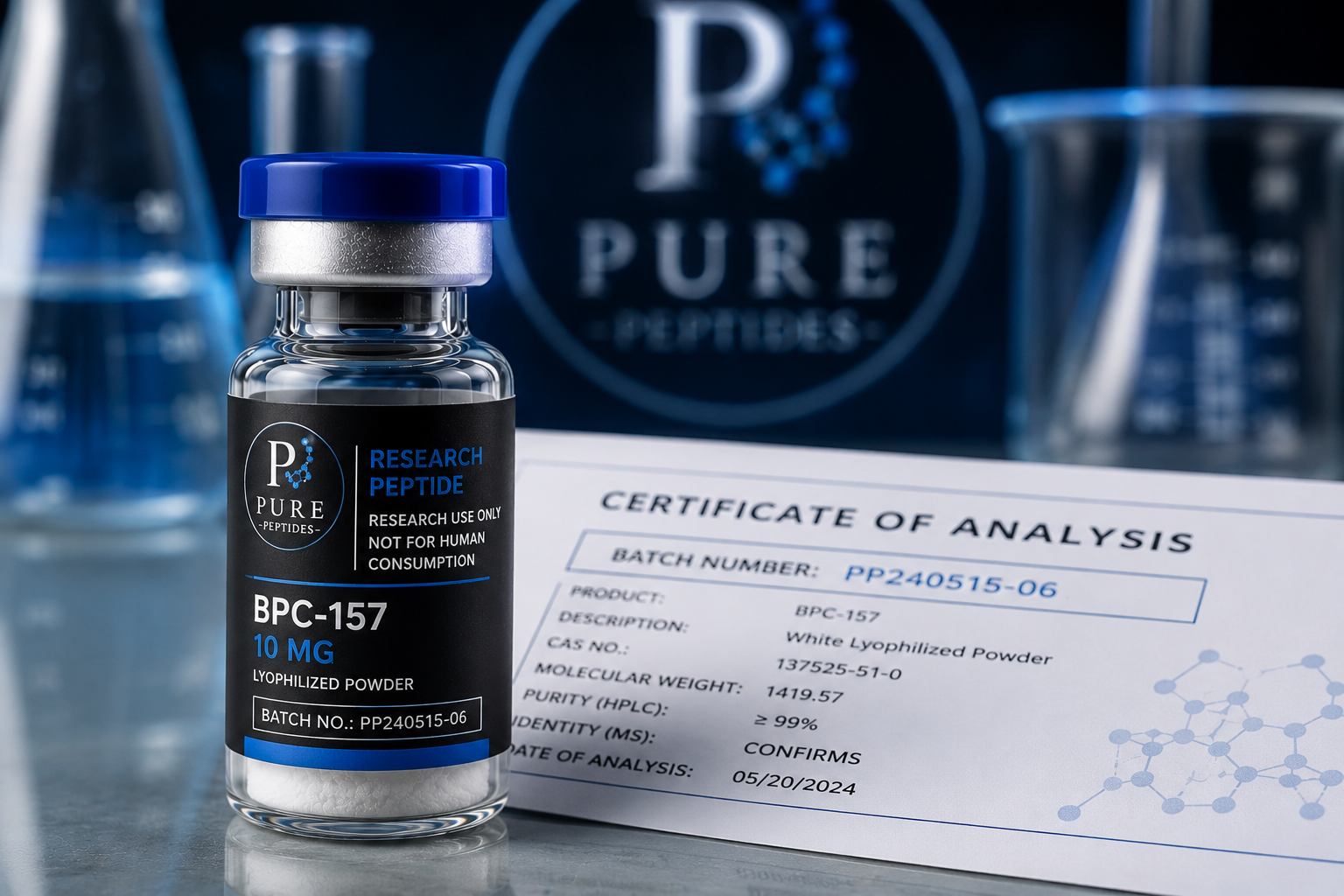
If you’ve ever received a research peptide with a Certificate of Analysis (COA), you’ve probably noticed a batch number printed on both the vial and the analytical report.
While it may seem like just another code, the batch number plays an important role in laboratory quality control and traceability.
What Is a Batch Number?
A batch number (sometimes called a lot number) is a unique identifier assigned to a specific manufacturing run.
Every vial produced during that manufacturing batch shares the same identifier, allowing researchers and manufacturers to trace products back to a particular production lot.
Why Are Batch Numbers Important?
Batch numbers help improve transparency by allowing researchers to:
- Match products to their Certificate of Analysis (COA)
- Verify testing documentation
- Identify manufacturing lots
- Support product traceability
- Differentiate between production runs
Matching Your COA
One of the simplest ways to verify documentation is to compare the batch number printed on the vial with the batch number listed on the Certificate of Analysis.
Matching numbers indicate that the analytical report corresponds to the same manufacturing lot as the product being evaluated.
Why Traceability Matters
Traceability is an important part of laboratory quality systems.
If questions ever arise regarding a particular production run, batch numbers make it possible to identify the specific lot involved rather than every product produced.
This helps manufacturers maintain organized quality records and supports consistent documentation.
Traceability is an important part of laboratory quality systems.
If questions ever arise regarding a particular production run, batch numbers make it possible to identify the specific lot involved rather than every product produced.
This helps manufacturers maintain organized quality records and supports consistent
These two identifiers serve different purposes.
Batch Number
- Identifies the manufacturing lot.
Expiration or Retest Date
- Indicates the recommended timeframe for evaluation or continued quality assessment according to the manufacturer’s documentation.
What Should Researchers Look For?
When reviewing research materials, many researchers compare:
- Batch number
- Certificate of Analysis
- Product identity
- Purity information
- Testing date
- Analytical methods
Reviewing these details together provides a more complete picture of the documentation associated with a research product.
Final Thoughts
Batch numbers are an important part of research peptide documentation. They provide traceability, connect products to their analytical reports, and support quality control throughout the manufacturing process.
Taking a few moments to compare the batch number on a vial with its Certificate of Analysis is a simple step that helps ensure documentation corresponds to the product being evaluated.
Frequently Asked Questions
What is a peptide batch number?
-A batch number is a unique identifier assigned to a specific manufacturing run of a research peptide.
Why should batch numbers match a COA?
-Matching batch numbers help confirm that the Certificate of Analysis corresponds to the same manufacturing lot as the product.
Are batch numbers the same as expiration dates?
-No. A batch number identifies the production lot, while an expiration or retest date refers to the manufacturer’s recommended evaluation timeframe.